
Canvas prints look simple from the outside: a photo or design, stretched over a frame, ready to hang. But between the file you upload and the piece that arrives at your door, there are several decisions that shape how it turns out. Whether you’re ordering a family portrait or big canvas printing in NYC for a retail space, knowing what those decisions are ahead of time makes the whole process a lot smoother.
This guide walks through the basics: material, sizing, finishing, and care, so you know what to ask for and what to expect before you place an order.
Not All Canvas Is the Same
Canvas material comes in a few common varieties, and the differences matter more than they might seem:
Cotton canvas has a soft, matte texture that works well for photography and fine art reproductions
Poly-cotton blends add durability and a slightly brighter surface, holding up well in high-traffic spaces
Textured canvas mimics a painted look, which suits artwork more than photographs
The right choice depends on what’s being printed and where it will hang. A photo destined for a bright, busy office benefits from a different surface than a piece of fine art going in a quiet reading room.
Getting the Size Right the First Time
Canvas prints are usually ordered by exact dimensions rather than off a fixed size chart, which is where custom size canvas printing becomes useful. Measuring the wall space first, and accounting for the depth of the stretcher bars, avoids the common mistake of ordering a print that looks right on screen but feels oversized or undersized once it’s actually hanging.
For multi-panel or gallery wall layouts, it helps to map out spacing between pieces before placing the order, since large canvas printing in NYC jobs often involve more than one panel working together as a set.
File Resolution Matters More on Canvas Than on Paper
Canvas has texture, which means it doesn’t reveal every flaw the way a smooth photo paper does, but it also means low-resolution files can look soft or blurry once scaled up. A general guideline is to supply files at 150 to 300 DPI at the final print size, and to avoid stretching a small image far beyond its native resolution.
If you’re not sure whether a file will hold up at a larger size, it’s worth asking before ordering rather than after. Most shops offering custom size canvas printing in NYC can check a file’s resolution against the requested dimensions and flag anything that’s likely to print soft.
It also helps to send along the original, uncompressed file rather than a version that’s already been resized or shared through social media, where compression tends to strip out detail. A raw photo file or a high-resolution export from design software gives a print shop the most to work with.
Stretching, Framing, and Finishing Options
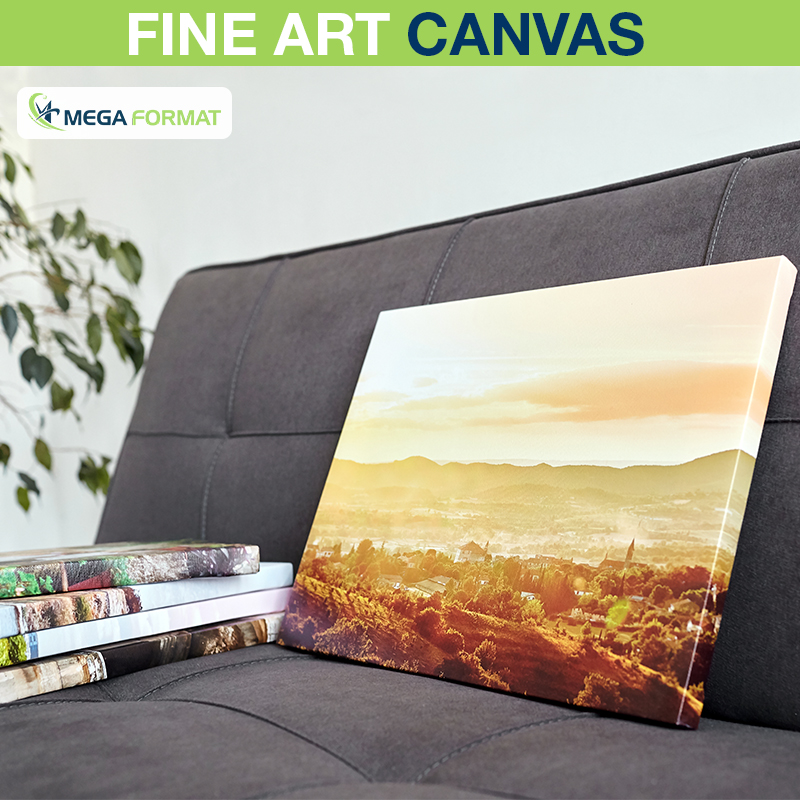
Once a canvas is printed, it still needs to be finished. Gallery wraps stretch the image around the sides of the frame for a clean, frameless look. Museum wraps mirror or extend the edge for a similar effect with a slightly different treatment at the corners. Traditional framing is also an option for anyone who prefers a more formal presentation.
A protective coating is worth considering too. It adds a layer of UV and moisture resistance, which matters for pieces that will hang somewhere with direct sunlight or fluctuating humidity.
Before finalizing an order, it helps to confirm a few details with whoever is printing the piece:
Which wrap style fits the intended display, gallery, museum, or framed
Whether a UV-protective coating is included or offered as an add-on
What hanging hardware ships with the finished piece
Turnaround time, especially for multi-panel or oversized orders
Caring for a Canvas Print After It’s Hung
Canvas is more forgiving than some print materials, but it still benefits from a few basic precautions. Light exposure is the biggest factor in long-term fading. Museums and archives take this seriously for a reason: the Canadian Conservation Institute publishes detailed guidelines on light, humidity, and handling for paintings and works on canvas, and many of the same principles apply to printed canvas hanging in a home or office.
The Smithsonian’s Museum Conservation Institute and the Getty Conservation Institute both maintain research on how canvas responds to environmental conditions over time. Keeping a print out of direct sunlight, away from heating vents, and in a room with reasonably stable humidity goes a long way toward preserving both color and the canvas itself.
For anything going into long-term storage rather than straight onto a wall, the Library of Congress offers general collections care guidance that’s a useful reference for handling and storing printed pieces safely between moves or renovations.
Placing Your Order
A little preparation before ordering, choosing the right material, confirming the size against your wall space, and checking file resolution, prevents most of the issues that come up with canvas printing. The rest comes down to working with a shop that can walk you through the options rather than leaving you to guess.
At Mega Format, custom size canvas printing is produced in-house on premium canvas stock, with options for gallery wrap, museum wrap, and traditional framing. The team can also review your file before printing to confirm it will hold up at the size you’re planning, whether that’s a single statement piece or a full canvas wrap gallery layout.
Ready to place an order? Upload your artwork to get started, or contact us first if you’d like to talk through sizing and material options.
