
Sustainability isn’t a side conversation in the printing industry anymore. Clients want durable materials, less waste, and vendors who make responsible choices, but they still expect the same crisp colors and fast turnaround they’ve always gotten. For companies built around large format printing in NYC, that combination is realistic. It just takes the right materials, the right equipment, and a willingness to rethink a few old habits.
This shift matters for print shops of every size. Retailers, event planners, and ad agencies increasingly ask vendors about their environmental practices before placing an order. Sustainable commercial printing gives businesses a practical way to respond to those expectations while maintaining the quality, durability, and turnaround their projects require. Meeting that expectation doesn’t mean lowering standards. It means being more intentional about what goes into every banner, poster, or display that leaves the shop.
What Sustainable Printing Actually Involves
“Sustainable printing” covers more ground than most people realize. In practice, it touches nearly every stage of a print job, including:
The raw materials used, from vinyl and canvas to paper stock
The inks and coatings applied during production
The energy consumed by presses and finishing equipment
How much scrap, offcut, and unused product ends up as waste
Whether products are built to be reused instead of replaced
None of these areas requires sacrificing print quality. In most cases, the more sustainable option performs just as well, and sometimes better, than what it replaces, once a shop knows what to look for.
What’s changed over the past few years is availability. Recyclable substrates, low-VOC inks, and energy-efficient equipment are now more accessible, giving print businesses more options for reducing environmental impact without compromising performance. That gap has narrowed considerably, which means a shop doesn’t have to choose between staying competitive on price and turnaround, and making more responsible choices about materials and process.
Choosing Materials That Do Double Duty
Material choice is usually where sustainability efforts start. Many commercial print businesses consider recyclable vinyl and PVC-free substrates for banners and signage, along with custom-size canvas printing on cotton or blended canvas.Paper-based products are part of the same conversation. Sourcing stock certified by the Forest Stewardship Council gives print businesses, and their clients, confidence that the material came from responsibly managed forests, without changing how the finished piece looks or feels.
For vinyl-based signage, self-adhesive vinyl printing can be a practical option. It holds up well for long-term outdoor use, but many self-adhesive films are now produced with lower-impact adhesives and thinner, more efficient face stocks than older alternatives. Local businesses searching for adhesive vinyl printing are usually looking for both speed and quality, which is a good reminder that greener materials need to keep pace with production timelines rather than slow them down.
Inks and Coatings Matter More Than People Think
Ink choice is one of the easiest upgrades a print business can make. Eco-solvent, latex, and UV-curable inks can produce vivid, long-lasting output while helping reduce volatile organic compound emissions compared with some conventional printing processes. That difference matters for any shop offering large format digital printing in NYC, where equipment often runs for hours at a time inside an occupied workspace.
The EPA’s Safer Choice program evaluates chemical products against strict human health and environmental criteria. It’s a useful reference point for print businesses vetting new ink, coating, or cleaning suppliers, even outside the specific products the program formally certifies.
Energy and Equipment Choices Add Up
Large-format printing equipment runs for long stretches, so its energy use adds up fast. Newer presses and finishing machines are considerably more efficient than models from even five or ten years ago. Simple practices, like powering down idle equipment and batching production runs to avoid partial jobs, cut electricity use without touching output quality.
Programs like ENERGY STAR offer guidance and benchmarks that extend well beyond home appliances. Sustainable commercial printing shops reference this kind of criteria when evaluating new press or finishing equipment purchases.

Certifications Build Trust With Clients
For print businesses that want to formalize their sustainability efforts, third-party certification is worth considering. The Sustainable Green Printing Partnership evaluates printers on energy use, waste management, health and safety, and other operational criteria specific to the graphics industry.
Certification isn’t required to run a responsible shop. But for clients comparing vendors, it offers an independent, verifiable signal that a company’s sustainability claims match its actual day-to-day practices, rather than being a line on a website.
Smaller commitments count too. Publishing the materials and inks used on a project, noting when a substrate is recyclable, or simply being upfront with clients about what’s changed in the shop can build the same kind of trust on a smaller scale.
Cutting Waste Without Cutting Corners
Waste reduction is often the fastest place to see real results. Right-sizing print runs, reusing setup materials where possible, and recycling vinyl and canvas offcuts all reduce what ends up in a landfill, usually without adding any cost or time to a job.
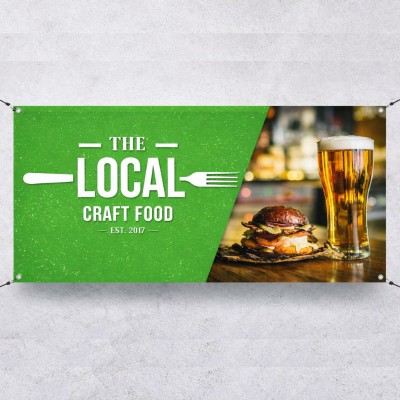
Trade show materials are a good example. Double-sided pull-up banners and other retractable banner printing options are built to be set up and broken down repeatedly across dozens of events, stretching their usable life far beyond a single-use poster or paper sign. Encouraging clients toward reusable formats, when it fits their needs, is a small shift that adds up considerably over time.
Where This Leaves Commercial Print Businesses
None of these changes require a complete overhaul. Most shops can start with one area, better materials, cleaner inks, or more efficient equipment, and build from there. The businesses that get the most out of it are the ones that treat sustainability as an ongoing practice rather than a one-time announcement.
At Mega Format, these choices sit alongside over a decade of experience producing everything from large format poster printing in NYC to full trade show displays. Materials and processes have shifted over the years, but the standard for color accuracy, durability, and turnaround hasn’t.
If you’re planning a project and want to talk through sustainable commercial printing options, contact us directly, or request a custom quote to get started.
